
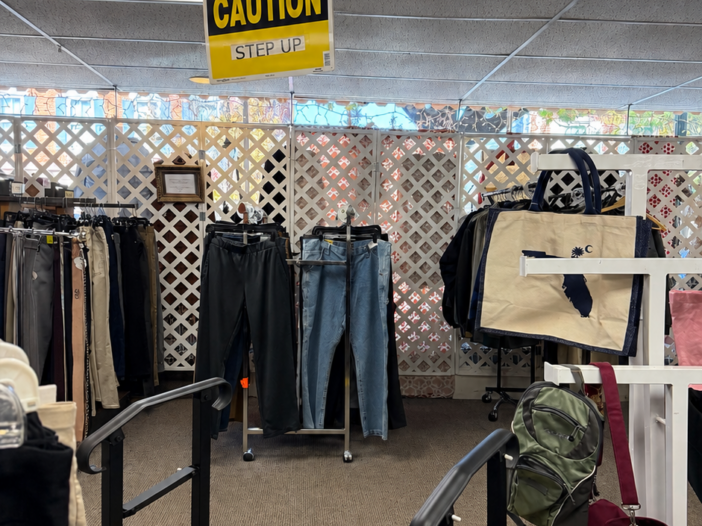
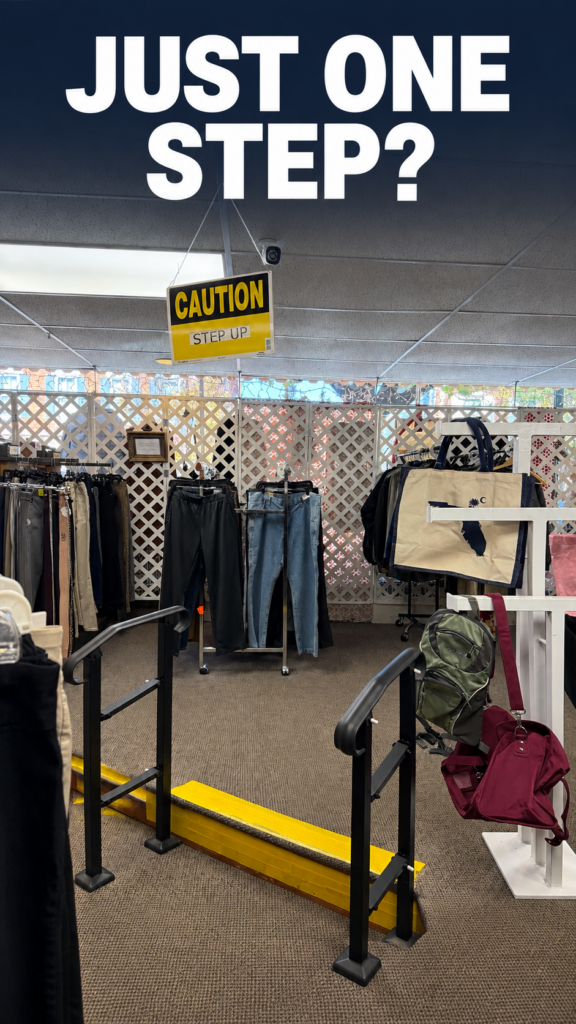
I recently posted a video about a single step that created a tripping hazard. Someone commented, “It’s just a single step. That’s not dangerous.”
Tell that to someone who has suffered a Traumatic Brain Injury, Broken Hip or other serious injury after a Trip and Fall incident.
One unexpected misstep can cause a fall that leads to surgery, permanent disability, or even death.
How one step can cause so much damage
When your foot catches a step, your body keeps moving forward. When you miss a step down, the ground isn’t where your body expects it to be.
Either way, you can lose your balance before you have time to recover. Your body then rotates and falls. The injury depends on what twists, what hits the ground, and which part of your body takes the force.
Hip Injuries and the Risk of Fatalities
When someone falls sideways and lands on their hip, the impact can break their Hip. Older adults with osteoporosis are particularly vulnerable. According to the American Academy of Orthopaedic Surgeons, most hip fractures happen in older people after low-energy falls. A fall from standing height can be enough.
The consequences can go far beyond a broken bone. A 2019 review of 36 studies involving nearly 230,000 patients found an average one-year mortality rate of approximately 22% after hip fracture. That’s roughly one in five patients. The figure was similar when researchers looked only at studies of patients over 60.
For an older person who was living independently, a fall can change where they live and how much help they need.
Head injuries

If someone cannot catch themselves, their Head may strike the floor, pavement, or the edge of a step. Remember, the head isn’t falling just the height of the step. It starts several feet above the ground.
A head impact can cause a concussion or bleeding inside the skull. The CDC reports that falls account for nearly half of traumatic brain injury hospitalizations. Older adults taking blood thinners face an increased risk of bleeding in the brain after a head injury.
Ankle and Lower Leg Fractures
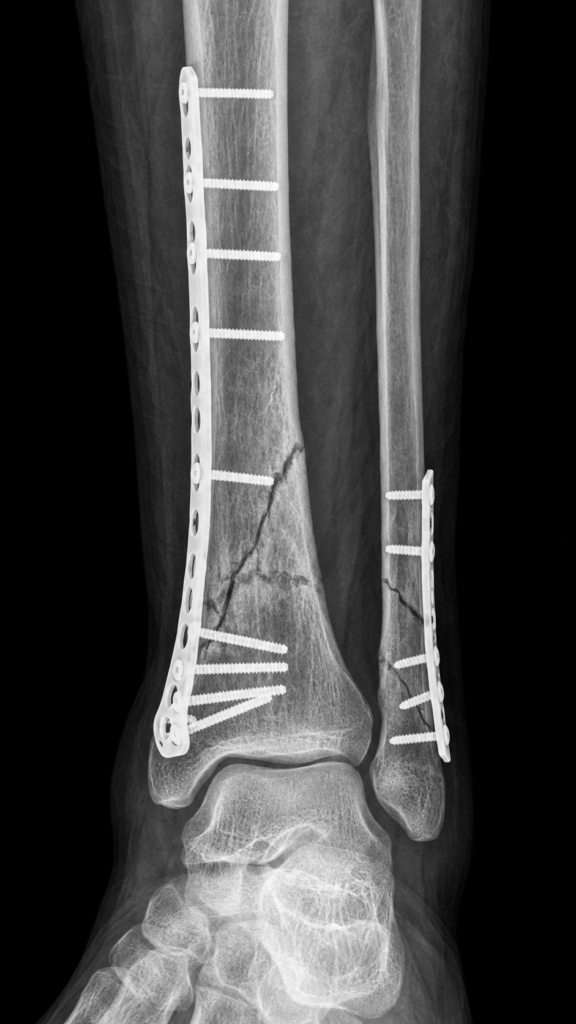
Sometimes the injury happens before you hit the ground. Your foot catches or lands awkwardly, your ankle twists, and your body weight continues moving over it. That can tear ligaments or break the lower ends of the tibia and fibula, the bones forming the ankle.
Ankle fractures involving both sides of the joint are often unstable and commonly require surgery with plates and screws. Simply twisting or rolling an ankle while walking can cause a fracture.
Broken wrists
What do most people do when they fall forward? Put their hands out. That instinct helps protect the face and head, but it sends the force of the landing through the wrist.
Falling onto an outstretched arm is the most common cause of a distal radius fracture, a break near the wrist. Some require surgery with plates and screws and results in permanent lost range of motion and pain.
Torn Shoulder Rotator Cuffs
Trying to catch yourself can also tear the tendons in your shoulder. As your muscles try to slow the fall, the tendons can be suddenly stretched beyond their strength.
Rotator Cuff Tears often require surgery to repair. I’ve had many Trip and Fall clients explain that the rehabilitation from Rotator Cuff Surgery is lengthy and extremely painful.
When a property owner may be responsible
A serious injury from a Trip and Fall does not automatically make a property owner responsible. For a business visitor in Pennsylvania, a claim generally requires proof of an unreasonably dangerous condition, the owner’s actual or constructive knowledge, a failure to exercise reasonable care, and a connection to the injury. Whether the danger was known or obvious also matters.
If you have been injured in a Trip and Fall in Pennsylvania, you should consult with an experience Personal Injury Lawyer to analyze your claim. You may have legal rights to recover compensation for Medical Bills, Lost Income, Pain and Disability.
Tim Rayne is a Pennsylvania Trip and Fall Lawyer who helps injured accident victims understand their legal rights and receive fair treatment from insurance companies. Tim has law offices in Kennett Square and West Chester, Pennsylvania and can be contacted at 610-840-0124 or trayne@macelree.com or you can check out his website at www.TimRayneLaw.com.

Leave a Reply